
The tool doesn't think. You do.
 Benny Andrén
On juniors, AI, and what it actually means to be useful
The wrong question
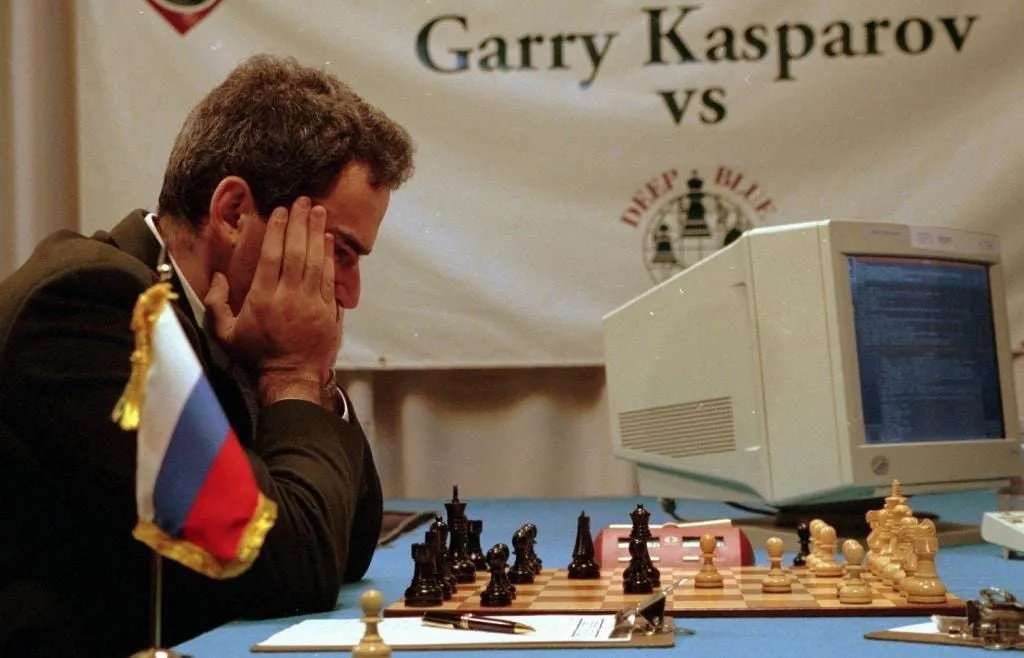
In 1997, Garry Kasparov lost to Deep Blue. The chess world called it the end of something. If a machine could beat the best human player alive, what was left for humans to contribute? The answer, it turned out, was most of it. Kasparov went on to pioneer a format called Advanced Chess, where humans and computers play together. The best teams weren’t the ones with the most powerful computers. They were the ones where the human knew how to ask the right questions.
That distinction has followed computing ever since. And right now, a version of it is playing out in every junior developer, analyst, and data engineer who is wondering if their career is already over before it began. The fear is not irrational. AI can write the code, explain the architecture, debug the stack trace, and suggest the better approach. The mechanical cost of software development has collapsed almost overnight. If a junior used to add value by doing the doing, what exactly do they contribute now? But this fear assumes that doing the doing was ever the point.
What was always scarce
Doing was never the job, it was the entry fee. What was always scarce, in juniors, in seniors, in any practitioner worth working with, was judgment. The ability to look at a working system and ask whether it solves the right problem. The instinct to push back on a design decision because something feels off, even before you can articulate why. The curiosity that does not stop at “this compiles” but continues to “is this actually what we need?” AI has not made that scarcer. It has made it more visible.
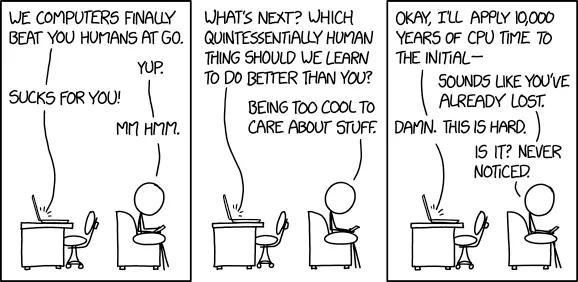
xkcd #1875: Computers vs Humans
Not long ago, the first months of any data or engineering role were dominated by a specific kind of question.
The old questions sounded like this:
How do I configure this pipeline?
What does this error mean?
How does this framework expect its inputs?
These are not bad questions, they are necessary ones. But they are also not the questions that move a team forward. What we instead hear from juniors now is a different kind.
The new questions sound like this:
Why is the pipeline designed this way?
If we’re pulling from the database anyway, why not go to the API directly?
This architecture makes sense for what we have today, but does it hold when we scale?
Those questions expose assumptions. They surface tradeoffs that were made years ago and never revisited. They treat the existing system as a position to be understood rather than a truth to be accepted. A junior with AI gets to these questions in week two instead of month six. That’s not a marginal improvement. It changes what a junior is.
The uncomfortable part
This only works if you were actually thinking in the first place.

Photo by Caleb Woods on Unsplash
The junior who was already avoiding the cognitive work does not benefit from any of this. The one who copied solutions without really understanding them, who hid behind “I’m still learning” as a permanent condition, who produced output without ever truly engaging with the problem at hand.
For that person, AI removes the last places to hide. The scaffolding is gone. What remains is the thinking and if the thinking was never really happening, that becomes obvious fast.
This is not a new failure mode. AI did not create it. It just makes it a lot harder to keep hidden.
What we’re doing about it at Data Dao
We built a course around exactly this tension. We pair AI and development together from day one. Instead of treating AI like a tool introduced after someone has proven they can work without it we incorporate it in the actual way we work, from the first commit, the first query, the first architecture discussion. We’re not betting on AI to do the work for our juniors. The bet is that it will stop them from wasting time on work that was never really the point to begin with.
Seniors still teach. But what they teach has changed. Nobody needs to memorize syntax for every new config system anymore, and pretending otherwise is a waste of everyone’s time.
What we do expect is that every decision can be explained - not documented, explained. Documentation can be generated. Understanding can’t.
The result is that junior-senior collaboration has gotten genuinely better. Juniors arrive at conversations with sharper questions. Seniors get to answer something worth answering.
The same division of work
Kasparov’s insight was that the machine and the human were not competing for the same thing. The machine could calculate faster and see further ahead. The human could frame the problem, read the position, and decide what kind of game was worth playing.
That division has not changed. The juniors who will thrive are not the ones who know the most syntax. They are the ones who understand that framing the problem was always the job. AI did not take that away. It removed everything that wasn’t it.
The tool doesn’t think. You do.
Ada Lovelace wrote this in 1843:
“The Analytical Engine has no power of originating anything. It can only do what we know how to order it to perform.”
Benny Andrén is the co-founder and CEO of Data Dao, where we help companies build data capabilities that stick.